After nearly three decades of delays, the Russian Navy has moved one of its most powerful warships one step closer to returning to service. On June 1, 2026, the heavy nuclear powered battlecruiser Admiral Nakhimov began the final phase of sea trials a critical milestone in a modernization effort that has dragged on since the Soviet era.
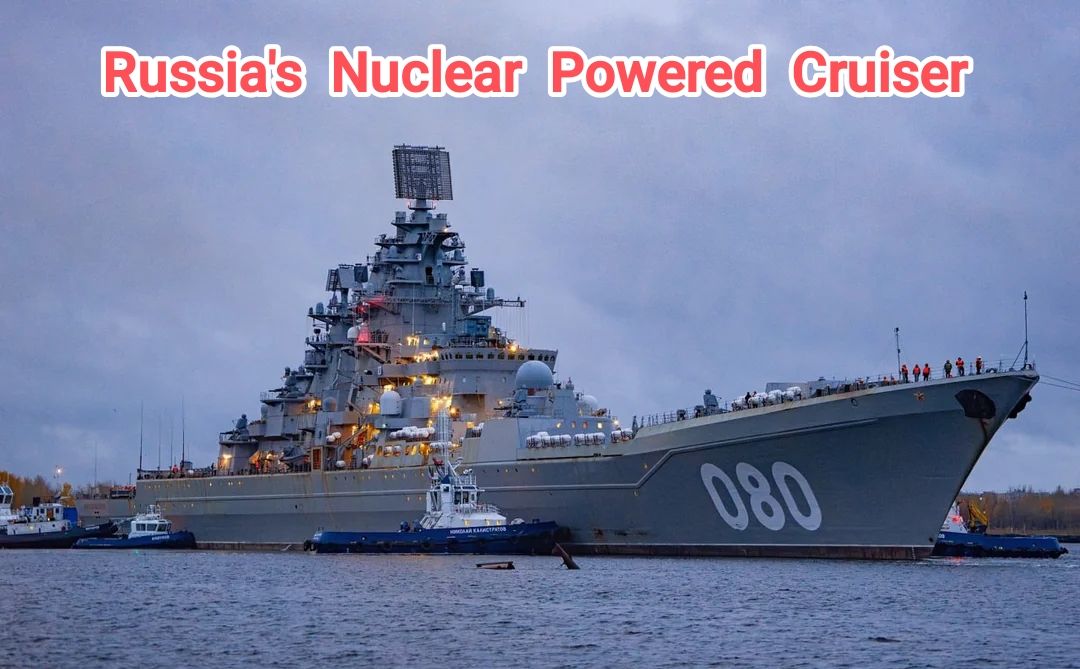
The Admiral Nakhimov is one of two remaining Kirov-class cruisers in Russian service. With a displacement of 28,000 tons, it is the largest surface combatant in the world bigger than a Japanese Izumo-class aircraft carrier and more than three times the size of a U.S. Arleigh Burke class destroyer. It is also one of the few nuclear-powered surface warships still operational anywhere on the planet.
Overwhelming Firepower
When it comes to weaponry, the Admiral Nakhimov is in a league of its own. The ship carries 176 vertical launch cells:
• 96 cells for surface-to-air missiles, using a naval version of the S-400 air defense system – equivalent to three ground-based S-400 battalions.
• 80 cells for cruise missiles, including the new Zircon hypersonic missile, which flies at Mach 9, has a range of 1,000 kilometers, and is designed to pierce even the most advanced multi-layered air defenses.
Russian military sources claim the Zircon gives their surface fleet a decisive long-range advantage over foreign rivals, with only China’s YJ-20 anti-ship ballistic missile considered comparable.
Arctic Deployment but an Uncertain Future
The Admiral Nakhimov is confirmed to serve under Russia’s Arctic Fleet, where its high endurance and heavy armament are well-suited to defending the Northern Sea Route especially as Russian commercial shipping faces increasing threats.
However, the cruiser’s return does not signal a broader revival of Russia’s large surface fleet. In July 2023, the Russian Defense Ministry confirmed that the Admiral Nakhimov’s sister ship, the Pyotr Veliky, will not receive similar upgrades and will be retired early. High operational costs, expensive refurbishment, and budget pressures from the war in Ukraine are believed to be the main reasons.
Russia has not laid down a new destroyer-sized vessel since the collapse of the Soviet Union, and its surface fleet increasingly relies on aging ships. The 2022 sinking of the cruiser Moskva by Ukrainian missiles highlighted the vulnerability of poorly maintained Soviet-era vessels.