The US-Iran war (often called “Operation Epic Fury” in US reporting) began on February 28, 2026, with major joint US-Israeli airstrikes on Iranian military, nuclear, missile, and leadership targets. Iran responded with missile and drone attacks on US bases, Gulf states, Israel, and energy infrastructure, while attempting to disrupt shipping in the Strait of Hormuz. The conflict has involved sustained air and naval operations but no large-scale US ground invasion as of early April 2026.
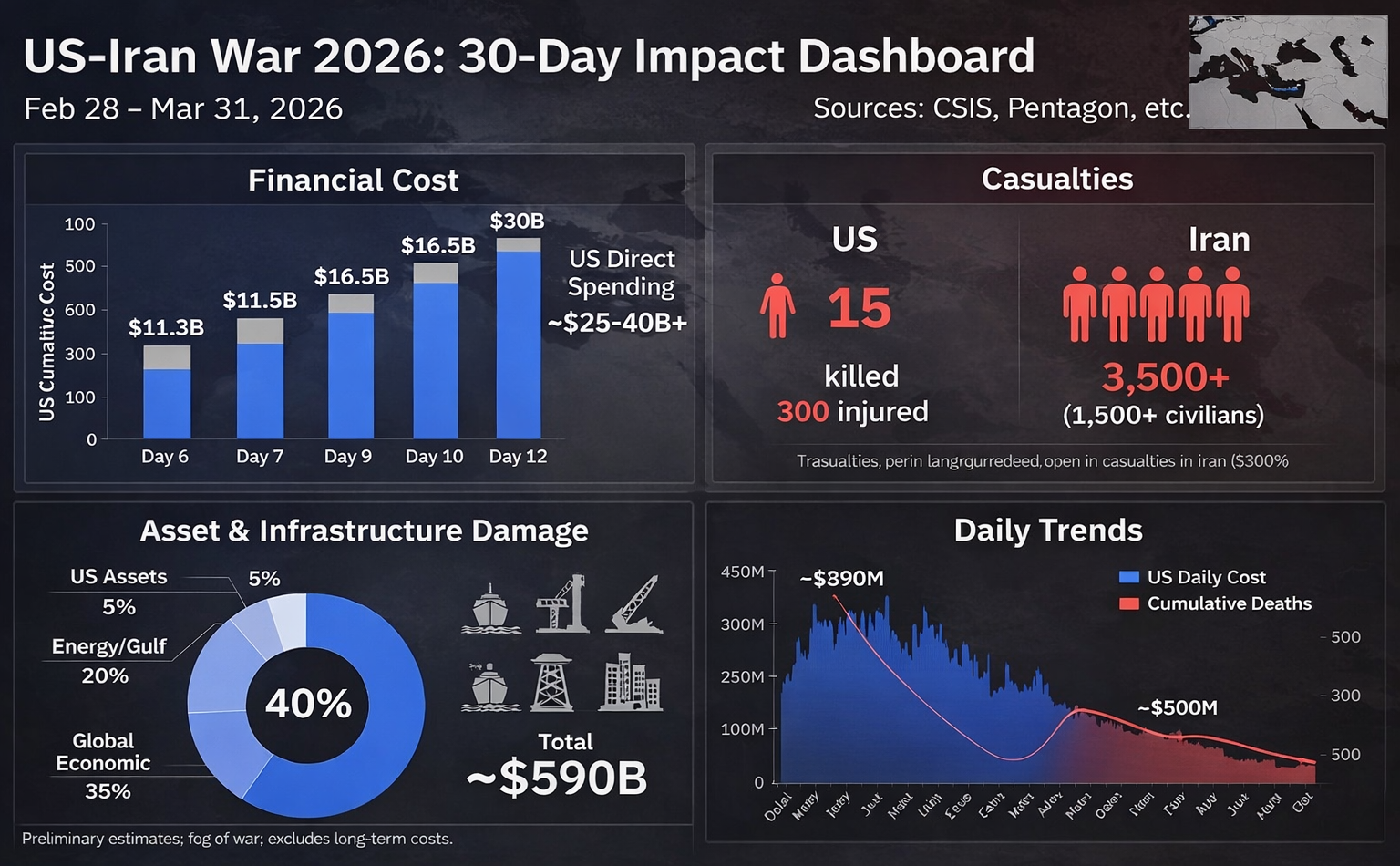
One-month (approximately 30-day) estimates draw from Pentagon briefings, think tank analyses (primarily CSIS), media reports, and aggregated data. Figures are preliminary, vary by source, and exclude many indirect or long-term costs. The war remains active, with daily costs declining after the intense opening phase but still significant.
US Military Costs (Direct Operations, Munitions, Losses)
• First 6 days : Pentagon briefing to Congress reported $11.3 billion (including ~$5.6 billion in munitions in the first 2 days). This excludes some buildup and support costs.
• First 12 days : CSIS estimated ~$16.5 billion cumulative (operations + damages), with daily costs dropping from ~$890 million–$1 billion early on to lower rates as cheaper munitions were used and Iranian launches declined.
• First 3 weeks : US combat losses and infrastructure damage (e.g., radars, bases hit by Iranian missiles/drones) estimated at $1.4–2.9 billion. Broader asset losses (including AN/TPY-2 radars for THAAD systems) have been reported in the billions.
• One-month extrapolation : Direct US costs likely exceed $25–40 billion (using CSIS trends of ~$0.5 billion/day later in the conflict, plus higher early spending). Some trackers and analysts project higher ongoing daily rates (~$500 million–$1 billion), pushing totals toward $30–50+ billion depending on intensity. Supplemental funding requests (e.g., $50–200 billion) have been discussed for munitions replenishment and losses.
Major cost drivers :
• High-end munitions (e.g., JASSMs, Tomahawks) in the opening barrage.
• Air/naval operations (carrier groups, bombers, tankers).
• Replenishing depleted stocks and repairing/replacing damaged assets (e.g., radars, aircraft).
Broader US economic impacts include higher fuel prices (oil surged above $100/barrel at peaks due to Hormuz disruptions) and potential inflation pass-throughs to consumers.
Iranian and Regional Assets Damage
• Iranian side : Heavy damage to missile/drone production, air defenses, navy (dozens of vessels sunk/damaged), nuclear sites, and leadership targets. Over 15,000 targets struck in early weeks. Infrastructure hits (including energy and civilian areas) reported, with long-term repair costs in the tens of billions. One outlet estimated combined direct/global losses at ~$590 billion after 30 days (including oil supply chain disruptions, environmental damage, and regional ripple effects).
• Gulf/Arab states : Iranian retaliation damaged energy facilities (oil/gas fields, LNG capacity in Qatar, refineries), desalination plants, and other infrastructure. UNDP estimated $120–194 billion GDP hit to Arab countries after one month (3.7–6% regional contraction), with millions pushed into poverty. Strait of Hormuz disruptions halted much of the ~20 million barrels/day oil flow and LNG transit.
• Global fallout : Oil price spikes, fertilizer shortages, higher shipping/insurance costs, and supply chain issues (e.g., pharmaceuticals, food). Long-term environmental and reconstruction costs add uncertainty.
Casualties and Human Cost
• US : 13 service members killed, ~290–300 injured (as of late March reports).
• Iran : Thousands killed (estimates range 3,000+ total, including military leadership, ~1,300–1,500+ civilians; one strike on a girls’ school in Minab killed ~175). Over 20,000 wounded reported in some tallies; 3+ million displaced internally.
Other : Additional deaths in Lebanon, Gulf states, and Israel (lower hundreds combined). Regional humanitarian crisis with widespread displacement.
Casualty figures are incomplete due to fog of war, restricted reporting in Iran, and varying sources (official vs. activist/NGO). Civilian tolls include strikes on populated areas.
Major Context and Caveats
• Early phase was most expensive due to high munitions use; costs moderated with air dominance and reduced Iranian counterfire.
• No full ground war yet, which would dramatically increase costs (historical analogs like Iraq suggest hundreds of billions over time).
• Broader economic losses (oil shocks, global trade) far exceed direct military spending and affect third parties hardest.
• Estimates evolve rapidly; official US figures often undercount unbudgeted items, while think tanks like CSIS provide detailed breakdowns.
This conflict has imposed severe human, financial, and strategic costs on all parties, with global energy and economic ripples ongoing. For the latest developments, real-time tracking from sources like CSIS or official briefings would be needed as the situation changes.