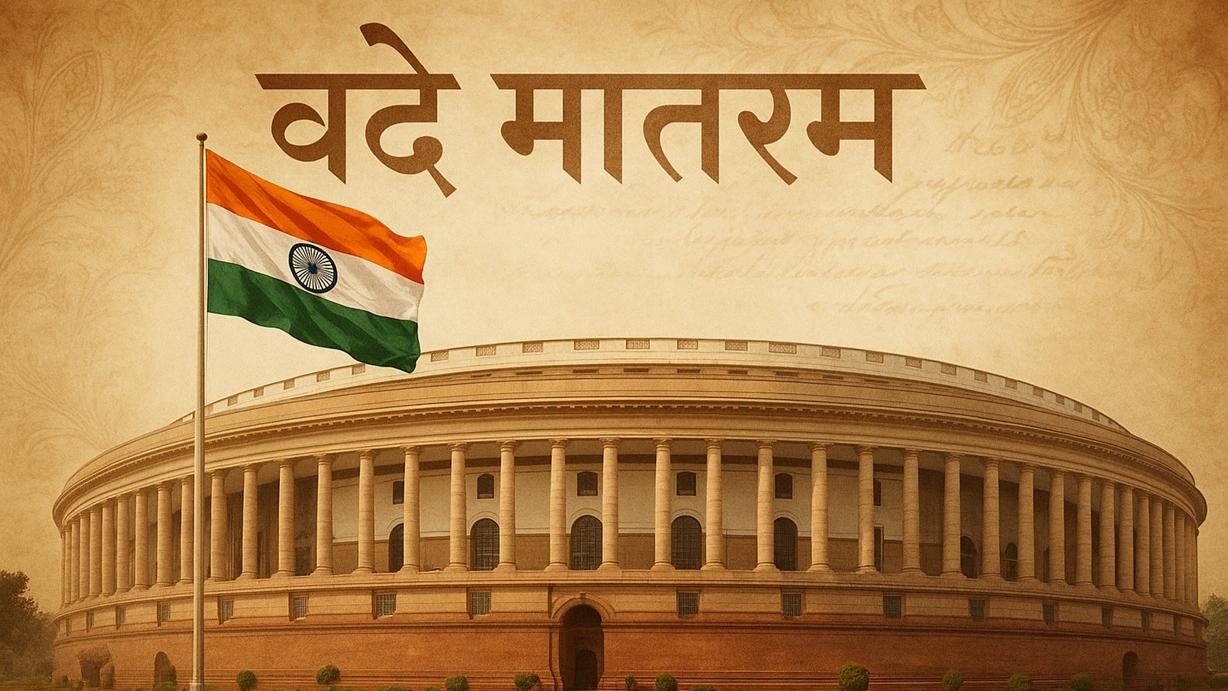
The ongoing debate in India’s Parliament on “Vande Mataram” (often spelled “Vande Matram” in some contexts) refers to a special discussion marking the 150th anniversary of the national song, penned by Bankim Chandra Chatterjee in 1875 as part of his novel Anandamath. This event, part of the Winter Session, has sparked heated exchanges between the ruling BJP-led NDA and the opposition (primarily Congress), blending cultural reverence with accusations of historical distortion and political diversion. The song, which symbolizes India’s freedom struggle and cultural nationalism, was officially recognized as the national song in 1950, with “equal status” to the national anthem Jana Gana Mana.
Key Highlights from the Parliament Debate on the Vande Mataram
Lok Sabha (December 8) :
PM Narendra Modi’s Opening : Modi called “Vande Mataram” a “mantra of unity and courage” that fueled the freedom struggle, accusing Congress of “fracturing” the song in 1937 to appease the Muslim League, which he linked to the seeds of Partition. He urged restoring its full glory for “Viksit Bharat” by 2047 and quoted Gandhi’s praise while criticizing Nehru’s “division.”
Defence Minister Rajnath Singh’s Response : Singh lamented that “justice was not done” to the song, claiming it was “sidelined” post-independence. He addressed “misinterpretations” of its metaphors, defending its inclusivity: “This is not to say our Muslim brothers did not understand these ‘metaphors’.”
Opposition Reactions : Congress MP Priyanka Gandhi Vadra criticized Modi for waning confidence and distorting history, while Gaurav Gogoi questioned the debate’s timing amid crises like unemployment. TMC’s Kalyan Banerjee protested perceived insults to Bengal icons like Chatterjee and Tagore. The House adjourned after heated exchanges, with BJP allotted 3 hours.
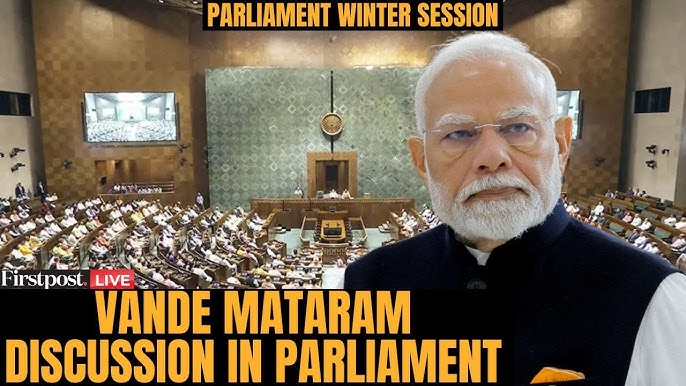
Rajya Sabha (December 9) :
Home Minister Amit Shah’s Opening : Shah echoed Modi, blaming Congress’s “appeasement politics” for “dividing” the song in 1937, calling it the start of Partition’s “division.” He asserted its relevance “today and in 2047,” accusing Congress leaders of “insulting” it by ending recitals in Parliament. Shah tied it to cultural nationalism: “It awakened India’s freedom struggle.”
Opposition Counter : Leader Mallikarjun Kharge called it a “diversion” from economic woes like inflation and rupee depreciation, urging focus on “Bharat Mata’s real issues.” Jairam Ramesh shared a 12-document compilation from 1937–1939 (letters from Nehru, Bose, Tagore, Gandhi, etc.) refuting “misinformation,” emphasizing the 1937 decision as a consensus for secular unity, not appeasement. TMC MPs staged a silent protest over “insults” to Bengal’s heritage.
The sessions cleared other bills (e.g., Health and National Security Cess) amid disruptions but adjourned without consensus on the song’s status.
Political and Public Reactions
Government’s Stance (BJP/NDA) : Frames the debate as honoring heritage and correcting “historical wrongs,” with ties to upcoming West Bengal elections (emphasizing Bengali roots). UP Deputy CM Keshav Prasad Maurya accused Congress of “dividing” the nation via the song.
Opposition’s Critique (Congress, TMC, etc.) : Views it as a ploy to polarize voters and dodge pressing issues (e.g., unemployment, farmer distress). Congress released historical archives showing Gandhi and Tagore’s support for the two-stanza version, calling Modi’s claims “distorian” tactics. Shiv Sena (UBT) chief Uddhav Thackeray mocked it as “One Day Mataram,” questioning why it’s debated now when the “mother” (India) suffers.
is Vande Mataram Debate more important than Air Pollution Crisis ?
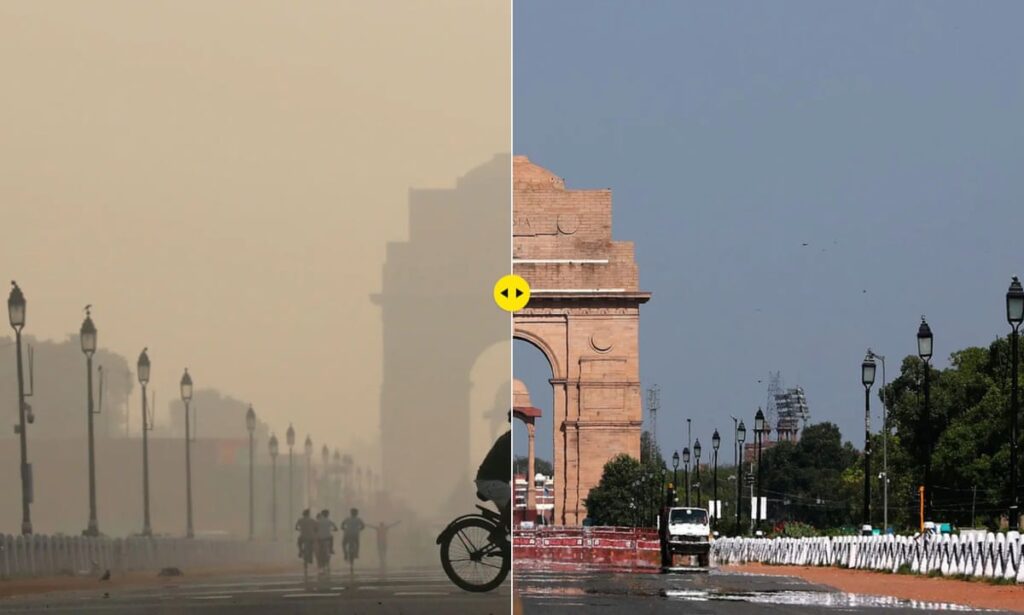
Vande Mataram is a powerful symbol of India’s freedom struggle and cultural pride. Honouring it in Parliament on its 150th anniversary is emotionally significant and politically useful, but it changes nothing on the ground.
Air pollution, on the other hand, is a daily emergency. Every winter (and increasingly every season), millions of Indians — especially children, the elderly and the poor — breathe toxic air that shortens lives by years, fills hospitals, reduces productivity and costs the economy lakhs of crores. Right now, Delhi’s children are inhaling the equivalent of 20–30 cigarettes a day, and dozens of cities are in the “severe” zone.
Symbols inspire a nation….Clean air sustains it.
One debate in Parliament can wait…The ability to breathe freely cannot.
Therefore, while respecting Vande Mataram is important for the heart, saving millions from poisonous air is urgently important for their lungs and lives. Air pollution is undeniably the far greater priority today.