New Delhi : India’s Defence Research and Development Organisation (DRDO) has achieved a significant technological milestone with the successful testing of morphing wing technology, a cutting-edge advancement expected to play a crucial role in future fighter aircraft and unmanned aerial systems.
Morphing wings are designed to change shape during flight, unlike conventional aircraft wings that rely on fixed structures with mechanical flaps and slats. This adaptive capability allows an aircraft to optimize its aerodynamic performance across different flight conditions such as take-off, cruising, high-speed dash, and combat manoeuvres.
According to defence sources, the technology has been validated through real-world flight testing on a demonstrator platform, moving beyond laboratory and wind-tunnel experiments. This places India among a small group of technologically advanced nations pursuing practical morphing wing solutions.
Boost for Future Combat Aircraft
The successful demonstration is seen as a major enabler for upcoming indigenous platforms such as the Advanced Medium Combat Aircraft (AMCA) and next-generation unmanned combat aerial vehicles (UCAVs). Morphing wings can improve fuel efficiency, manoeuvrability, and mission adaptability, while also contributing to stealth by reducing gaps and protruding control surfaces.
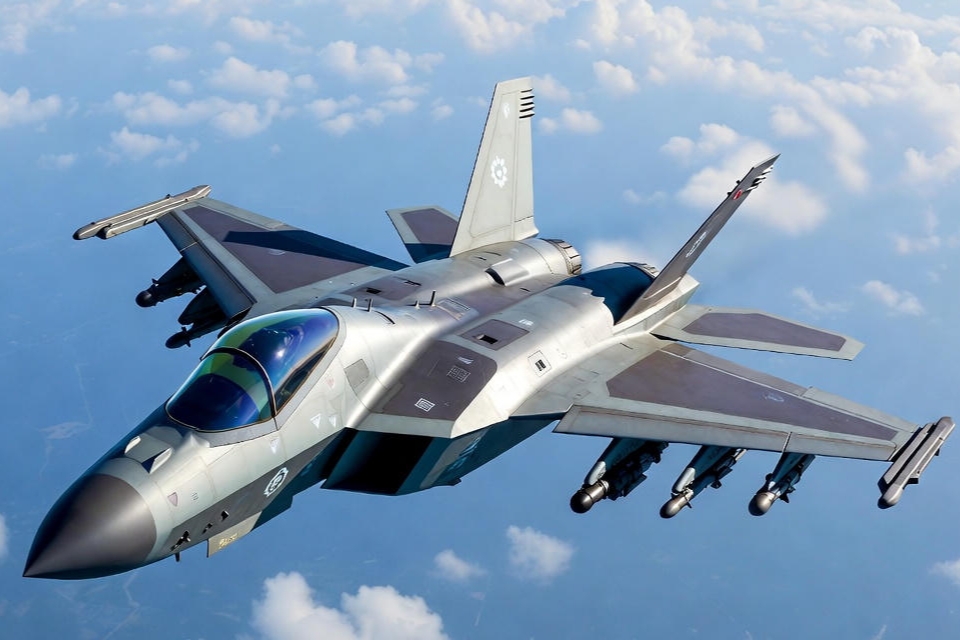
Defence experts note that such technology is particularly relevant for 5th- and 6th-generation fighter concepts, where survivability and performance depend heavily on adaptive aerodynamics and reduced radar signatures.
Strategic Significance
The development aligns with India’s broader push for self-reliance in critical defence technologies under the Atmanirbhar Bharat initiative. Advanced aerospace systems like morphing wings are traditionally restricted technologies, and indigenous mastery reduces dependence on foreign suppliers.
“Achieving reliable morphing under high aerodynamic loads is a complex challenge. This success reflects the growing maturity of India’s aeronautical research ecosystem,” a senior defence analyst said.
Next Steps
DRDO is expected to continue refining the technology for scalability and durability, focusing on materials, actuators, and control algorithms needed for full-scale combat aircraft integration. Further trials are likely before the technology is incorporated into operational platforms.
With this breakthrough, India strengthens its position in advanced military aviation research, signaling steady progress toward fielding next-generation indigenous air combat systems.